
How New Three-Wheeled Motorcycles Adapt to Urban and Rural Mobility Needs
Three-wheeled motorcycles are having a moment. Neither a motorcycle nor a car, they fill a gap that four-wheelers have never quite closed — and a new generation of models is purpose-built for the job.
In dense cities, size matters. A three-wheeler occupies about 60% of a compact car’s footprint and turns in under 3.5 meters, slipping through gridlock where vans and pickups sit stuck. For last-mile delivery and ride-hailing, that agility translates directly into more trips per day and lower operating costs.
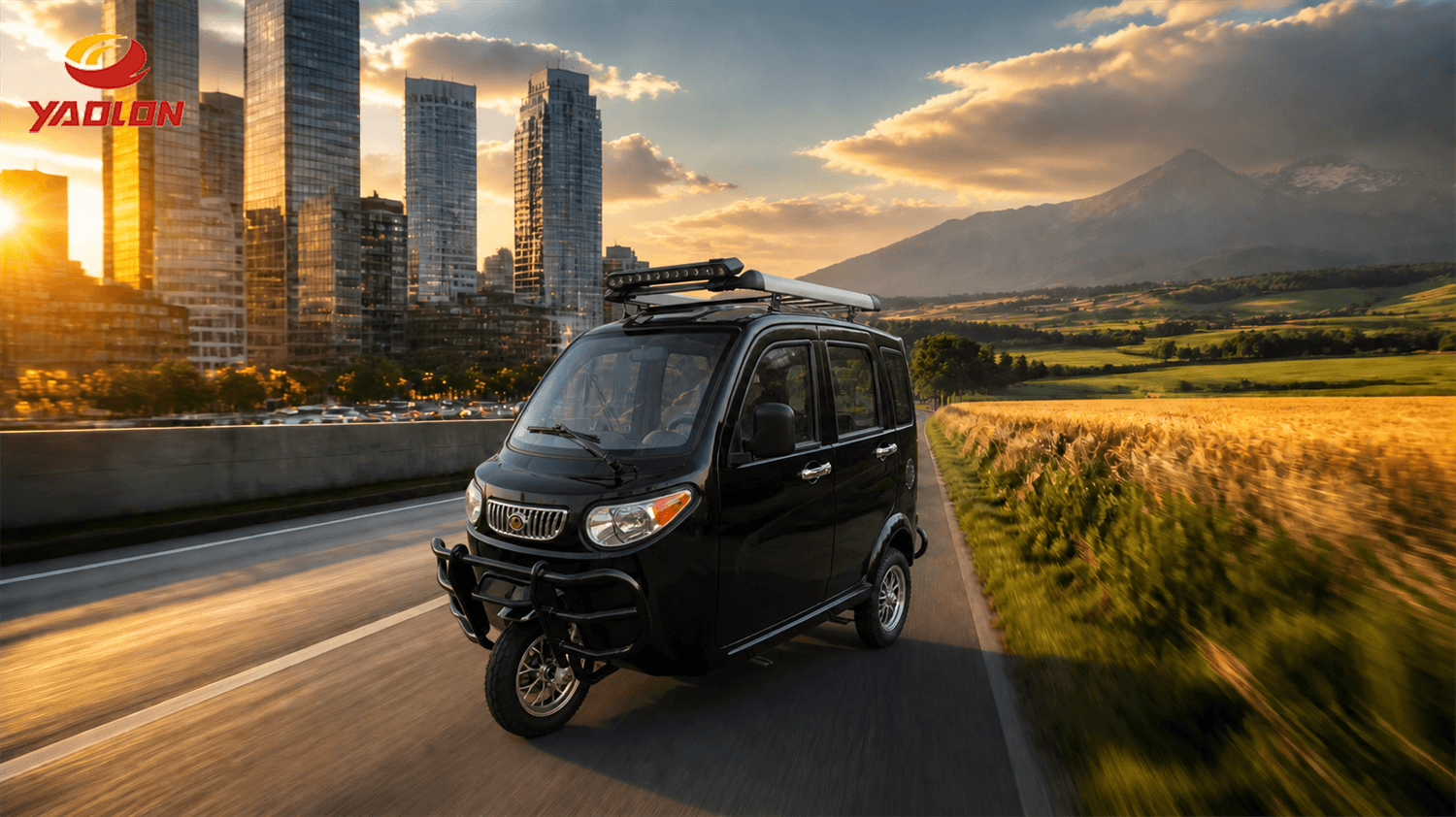
Ride-hailing platforms now treat three-wheeled auto-rickshaws as core fleet vehicles. Modern models come with enclosed cabins, USB charging, GPS tracking, and digital fare meters — turning a bare-bones utility vehicle into a credible mobility platform. Parking is another win: three three-wheelers fit where two sedans would fight for space.
Rural roads demand a different kind of vehicle — one that handles unpaved surfaces, starts reliably in the cold, and doesn’t bankrupt its owner when something breaks. A new three-wheeled cargo carrier costs \$2,000 to \$6,000, roughly one-fifth the price of a basic pickup. Its simpler drivetrain means repairs can often be done with basic tools and locally sourced parts.
For a smallholder farmer, a 200–400cc cargo three-wheeler hauling 500–800 kg of produce is the difference between reaching the market and watching crops rot. Modern models add reinforced chassis, load-tuned suspension, and electronic fuel injection that auto-adjusts for altitude and temperature — features that were luxury-car territory a decade ago.
Three-wheelers may be the ideal vehicle class for electrification. Most daily trips fall within a 50 km radius, so a modest battery pack covers the need without the weight or cost penalty of a long-range EV. Electric motors deliver instant torque — perfect for stop-start city traffic and low-speed rural climbs — with per-kilometer energy costs 70–80% lower than petrol.
Safety has also improved sharply. Wider stances, under-floor batteries that lower the center of gravity, steel roll cages, and disc brakes with combined braking systems are now standard on quality models.
Three-wheelers deliver 80% of a small truck’s utility at 20% of the cost. For millions of urban drivers and rural entrepreneurs, that makes them not just an option — but the smartest one.