
Lifelines on Three Wheels: The Critical Role of Specialized Tricycles in Global Humanitarian and Medical Logistics
When natural disasters strike, infrastructure collapses. Roads fracture, bridges fall, and major transport corridors become completely impassable for standard relief trucks and ambulances. In these high-stakes scenarios, as well as in permanently underserved remote regions globally, specialized medical and humanitarian tricycles are stepping up as literal lifelines, delivering critical care where four wheels cannot tread.
The sheer adaptability and resilience of the three-wheel platform make it an ideal tool for NGOs, global health organizations, and emergency response teams.
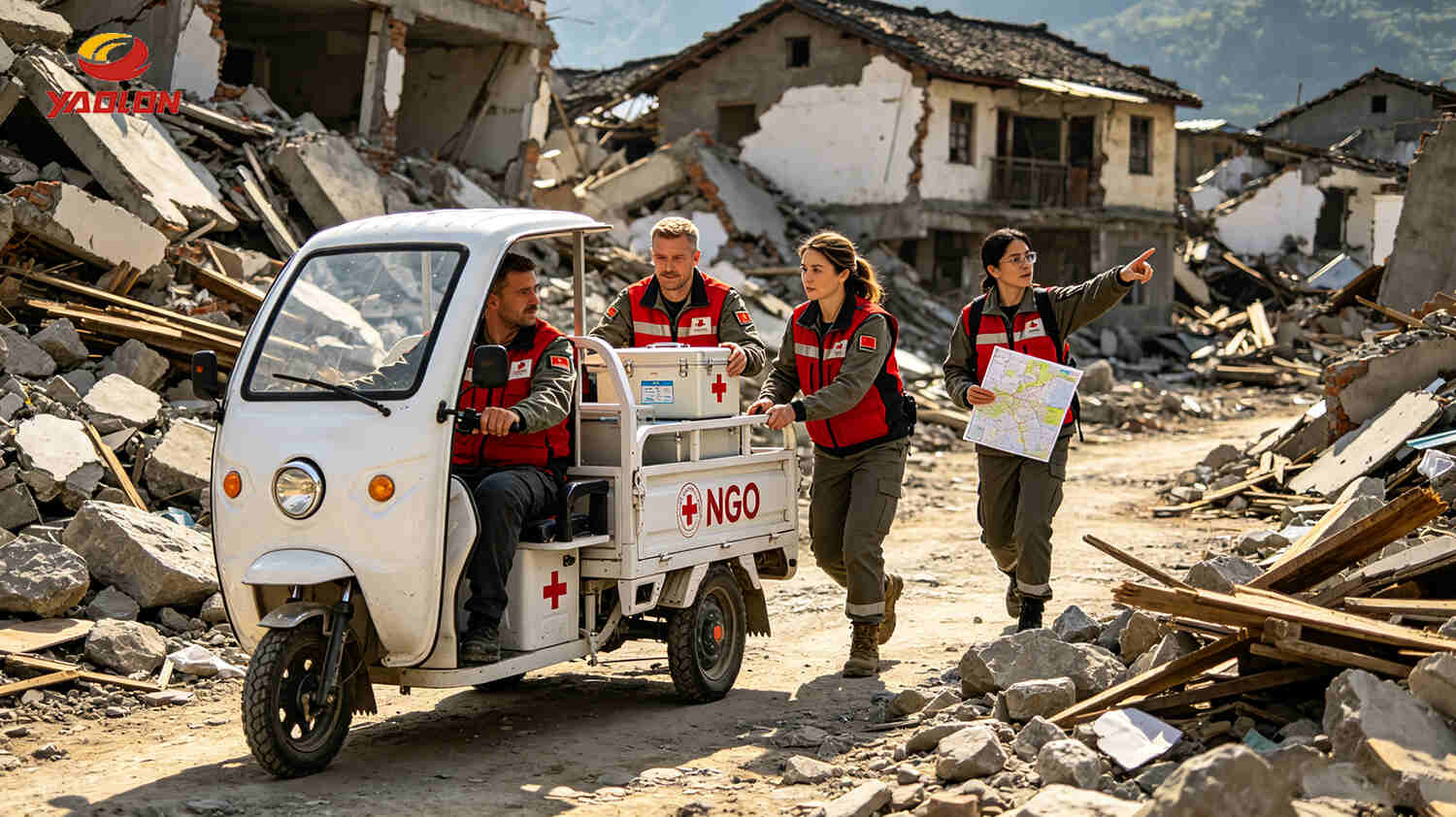
Deployable Mobile Clinics: Custom-engineered passenger chassis can be transformed into fully enclosed, sterile mobile examination rooms. Equipped with basic diagnostic tools, fold-out beds, and off-grid power, these trikes bring primary healthcare directly to remote villages or refugee camps.
Precision Pharmaceutical Cold-Chains: Transporting temperature-sensitive vaccines or insulin through tropical climates is highly complex. Specialized tricycles outfitted with active, battery-powered medical refrigerators can maintain strict temperature controls (2°C to 8°C) while traveling deep into off-grid territories.
Rapid First-Responder Mobilization: Compact, high-torque utility tricycles can be modified into mini-fire engines or rapid-response ambulances, carrying water pumps or extrication gear through debris-strewn streets long before heavy rescue vehicles can clear a path.
By providing an affordable, highly agile, and reliable alternative to expensive helicopters or large off-road vehicles, specialized tricycles are closing the global healthcare gap and proving that sometimes, the most effective humanitarian solutions come on three wheels.